Why a trusted EPC makes the difference in utility-scale solar projects
Conclusions from SEBS 2026 – Solar Energy Bucharest Summit, Palace of Parliament
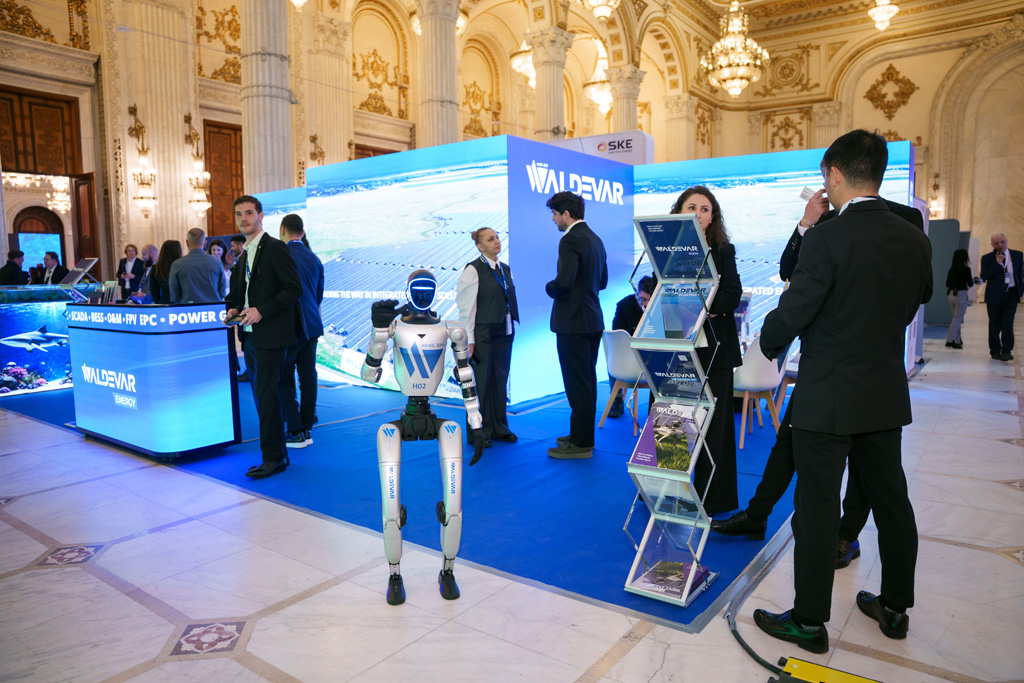
In an energy landscape shaped by the accelerated transition to renewable sources, solar energy is no longer a future option, but a strategic necessity of the present. This was the central message of SEBS 2026 – Solar Energy Bucharest Summit, a landmark event for the energy industry in Central and Eastern Europe, held in a highly symbolic venue: the Palace of Parliament.
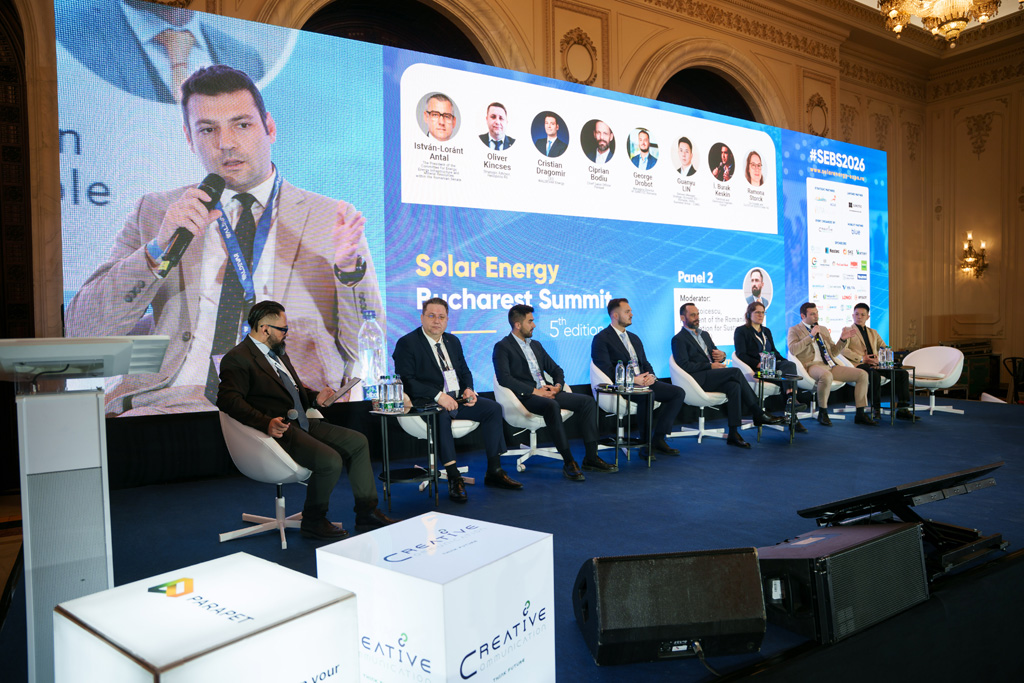
On stage, alongside other key industry players, Cristian Dragomir, CEO of WALDEVAR Energy, brought forward a core topic essential to market maturity: the importance of a trusted EPC.
From concept to reality: where solar projects are won or lost
One of the recurring themes of the discussion was the fundamental difference between planning a solar project and successfully delivering it. While financing, permitting, and feasibility studies are essential steps, a project’s success is decided, more often than not, during the execution phase.
An EPC (Engineering, Procurement & Construction) is not merely a service integrator; it is the element that connects strategy with on-site reality. Poor coordination, fragmented external resources, or compromises on quality can lead to delays, cost overruns, and long-term operational risks.
At SEBS 2026, it was clearly emphasized that trust in an EPC is built through real delivery capability, not just contractual commitments.
Fully integrated in-house resources: the foundation of a strong EPC
Cristian Dragomir emphasized that at WALDEVAR Energy, one of the pillars that clearly differentiates us in the market is the full integration of in-house resources. In an industry where many players rely heavily on subcontractors for critical project phases, we operate as an EPC with proprietary teams, taking full ownership of execution. This model delivers a tangible competitive advantage: operational coherence, speed of response, and guaranteed quality at every stage of the solar projects we deliver.
In-house resources mean:
- direct control over execution,
- flexibility in managing unforeseen challenges,
- alignment between engineering, procurement, and construction,
- the ability to meet strict timelines and quality standards.
In large-scale solar projects, where every delay translates into financial loss, the operational robustness of the EPC becomes a decisive criterion for investors.
Quality execution is not a slogan — it is a strategy
At WALDEVAR Energy, execution quality is non-negotiable, as Cristian Dragomir explained. In a highly competitive industry, where cost pressure often leads to compromises, we have consistently chosen the opposite path: investing in correct, rigorous, and sustainable execution. Field experience shows that any deviation from this principle inevitably results in performance risks, increased maintenance costs, and reputational exposure.
For this reason, our approach is built around delivering projects that perform reliably over the long term, without compromising on quality.
Quality must be understood as:
- a pillar of long-term sustainability,
- a key factor in project bankability,
- a guarantee of investment return.
Participants emphasized that solar projects are not merely infrastructure assets, but long-term energy assets, with the EPC playing a critical role in their lifetime performance.
In a rapidly expanding industry, internal organization becomes a strategic differentiator, not just an administrative detail.
Outlook for the solar energy market
SEBS 2026 reaffirmed a key reality: the regional solar market is entering a phase of maturity. Investors are more selective, projects are larger, and risk tolerance is lower. In this environment, collaboration with solid, well-structured, quality-driven EPCs is no longer optional — it is essential.
Discussions at the Palace of Parliament made one thing clear: the future of solar energy belongs to those capable of delivering not only installed capacity, but trust, consistency, and performance.
SEBS 2026 – Solar Energy Bucharest Summit confirmed that the future of utility-scale solar projects is built on trust, real delivery capability, and long-term performance. For WALDEVAR, these principles are concrete elements that define how we approach every project.
👉 To watch the full intervention and discussion from SEBS 2026, we invite you to view the complete video here: YOUTUBE